Storm damage is usually invisible from the ground
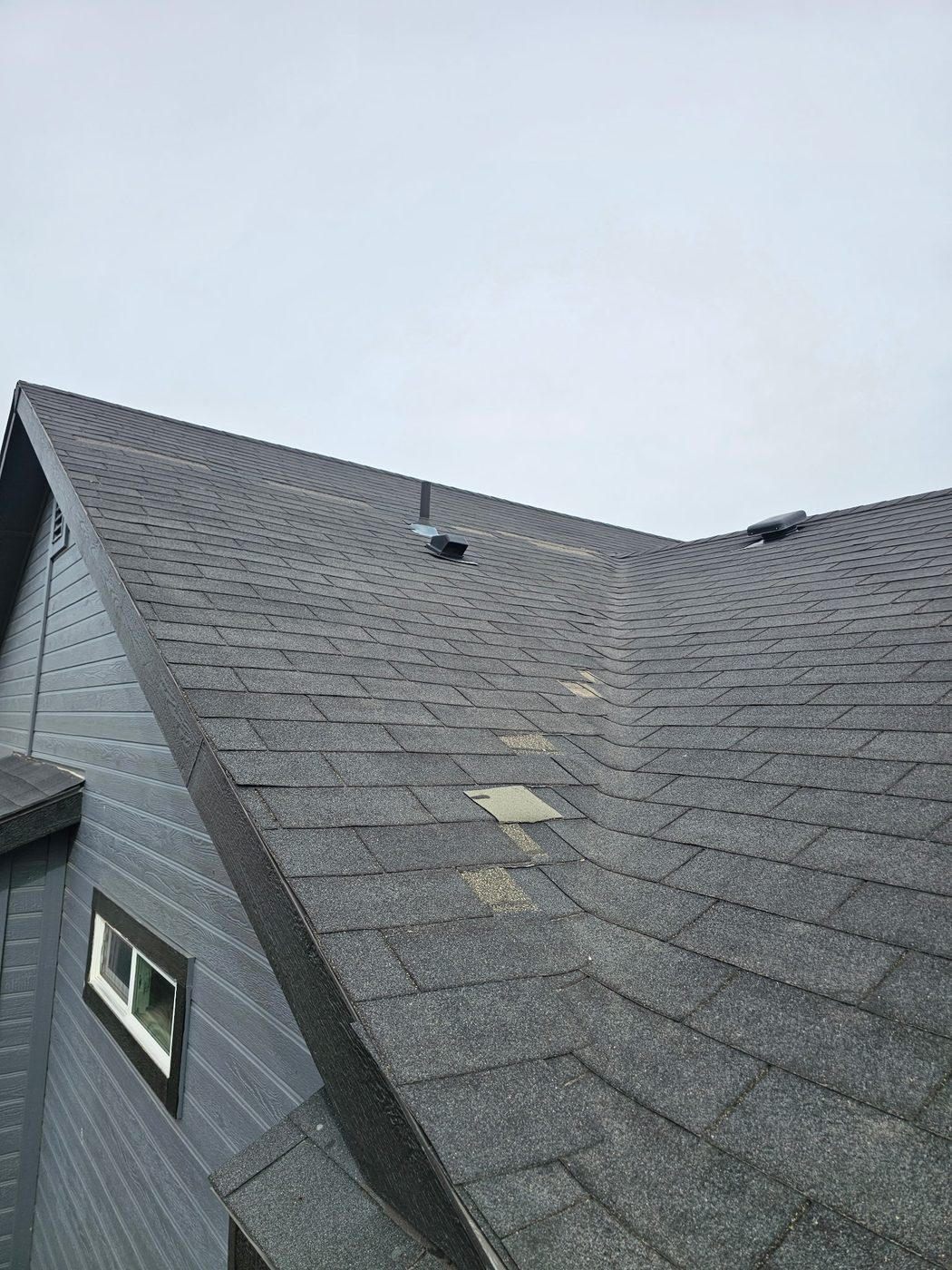
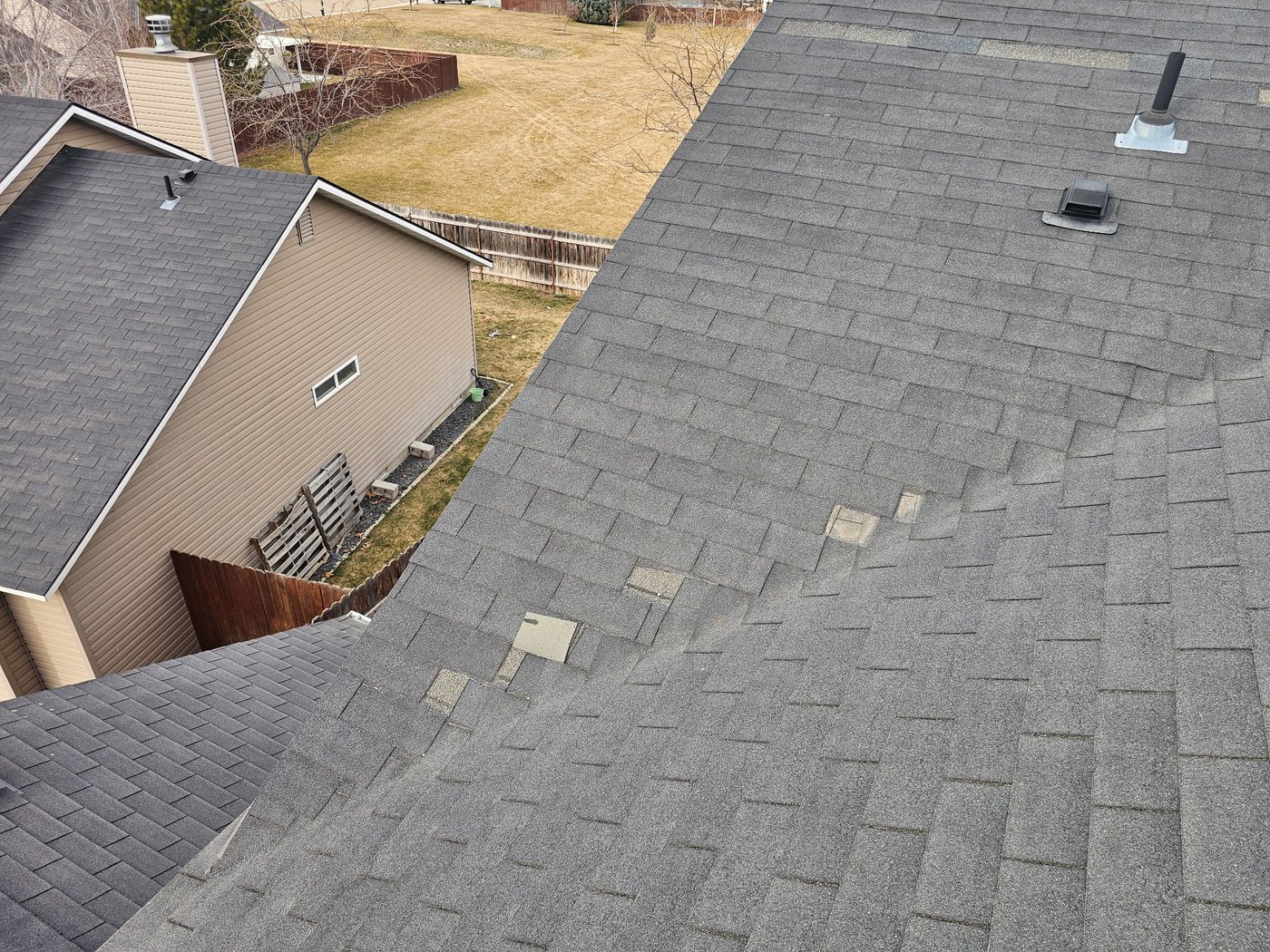
Wind creasing and hail bruising rarely look like anything from your driveway. They look like a leak eighteen months later, after the claim window has closed. A dated inspection now protects you either way.
- 5.0 stars on Google
- Idaho Reg. #6871862
- Workmanship warranty on every replacement

What storm damage actually looks like
Wind damage
The damage most homeowners miss. A high-wind event can break the seal between shingles without moving them enough to notice. From the ground, nothing looks changed. Water finds its way in during the next driving rain, and keeps doing so until it is repaired.
Wind also works on edges, flashing and ridge caps, and a full inspection covers all of it.
Hail damage
Hail does not usually punch holes. It bruises, knocking granules loose and damaging the mat underneath. The shingle looks intact but its protective layer is compromised, and UV finishes it off over the following couple of years. Hail bruising is genuinely hard to see from the ground and is a common reason claims get missed entirely.
Because it is so easy to miss, hail damage is one of the most common reasons a valid claim never gets filed. An inspection after a hail event is worth doing.
Snow load and ice
A heavy wet snow puts real weight on a roof structure, and the freeze-thaw cycle that follows drives water back under the shingle courses at the eaves. In McCall and Donnelly this is the primary storm concern rather than an occasional one.
Impact and debris
Branches, blown debris, and in a bad wind event, other people's roofing material. Impact damage is the most visible kind and the easiest to document.
Most policies have a reporting deadline
It is usually shorter than homeowners expect, and it starts from the date of the storm rather than the date you noticed a problem. That is exactly why invisible wind damage causes so much trouble, by the time it leaks, the window has often closed.
A dated inspection now gives you a record either way. If there is no damage, you have documentation that your roof was sound on that date. That is worth having.
Request a Storm-Damage InspectionBefore you sign with anyone
Storms bring a lot of door-knocking, and it is worth slowing down before you commit to a contractor. A few checks are worth doing with any company, including ours.
- Ask for a local physical address, then look it up
- Be wary of anyone who wants a signature the same day they knocked
- Walk away from anyone offering to cover or waive your deductible, in Idaho that is insurance fraud, and it is your name on the claim
- Never sign anything that assigns your claim benefits to a contractor
- Get the scope in writing before any money changes hands
Documentation is the whole game
An adjuster is deciding what is storm damage and what is age. That decision gets made from evidence.
Inspect and photograph
Full roof walk with dated images of every damaged area, wide and close, plus soft-metal evidence like gutters and vent caps.
Write the scope
A detailed written scope of the repairs the roof actually requires, in the language an adjuster works in.
Meet the adjuster
We can be at the property and walk the roof with your adjuster so the damage gets seen rather than described.
Complete approved work
Repairs or replacement completed to code, with our workmanship warranty on the installation.
Our role in your claim
Tru Armor Roofing is a roofing contractor. We inspect, document and repair the roof, and the claim itself always stays between you and your carrier. What we do is document the damage thoroughly enough that it is hard to overlook.
How the claim process worksGet the roof looked at while the claim window is still open
Free inspection, dated photo documentation, and a straight answer on whether you have a claim worth filing.
Common questions
As soon as it is reasonable to do so. Policy reporting deadlines run from the date of the storm, not the date you noticed damage. And wind and hail damage frequently show no symptoms for a year or more.
That is the normal case, and it is the reason this page exists. Wind creasing and hail bruising are close-up findings. If a significant event came through your area, get it looked at regardless of what it looks like from the driveway.
That is a question for your agent, not your roofer, and the honest answer varies by carrier and policy. What we can tell you is whether you have damage worth reporting, so you can make that call with real information.
It happens, often because the original documentation was thin. We can re-inspect and document thoroughly. The outcome always belongs to your carrier, and thorough documentation gives them the full picture to work from.
Yes. When water is actively entering the home, stopping it comes before everything else.
Know exactly where your roof stands
Tell us the basics and a local Tru Armor roofer calls you back to confirm a time that works.
- Free inspection, in person
- Repair-first recommendation when repair is the right call
- Your options, and time to decide on your schedule
Rather just talk to someone?
Call or text 208-550-9387. If it is an active leak, call.
Call 208-550-9387