Free roof inspection, with a written report you keep
A full walk of the roof, an attic check where we can reach it, and photos of every problem area. You get a written summary to keep, compare, or hand to your insurance company.
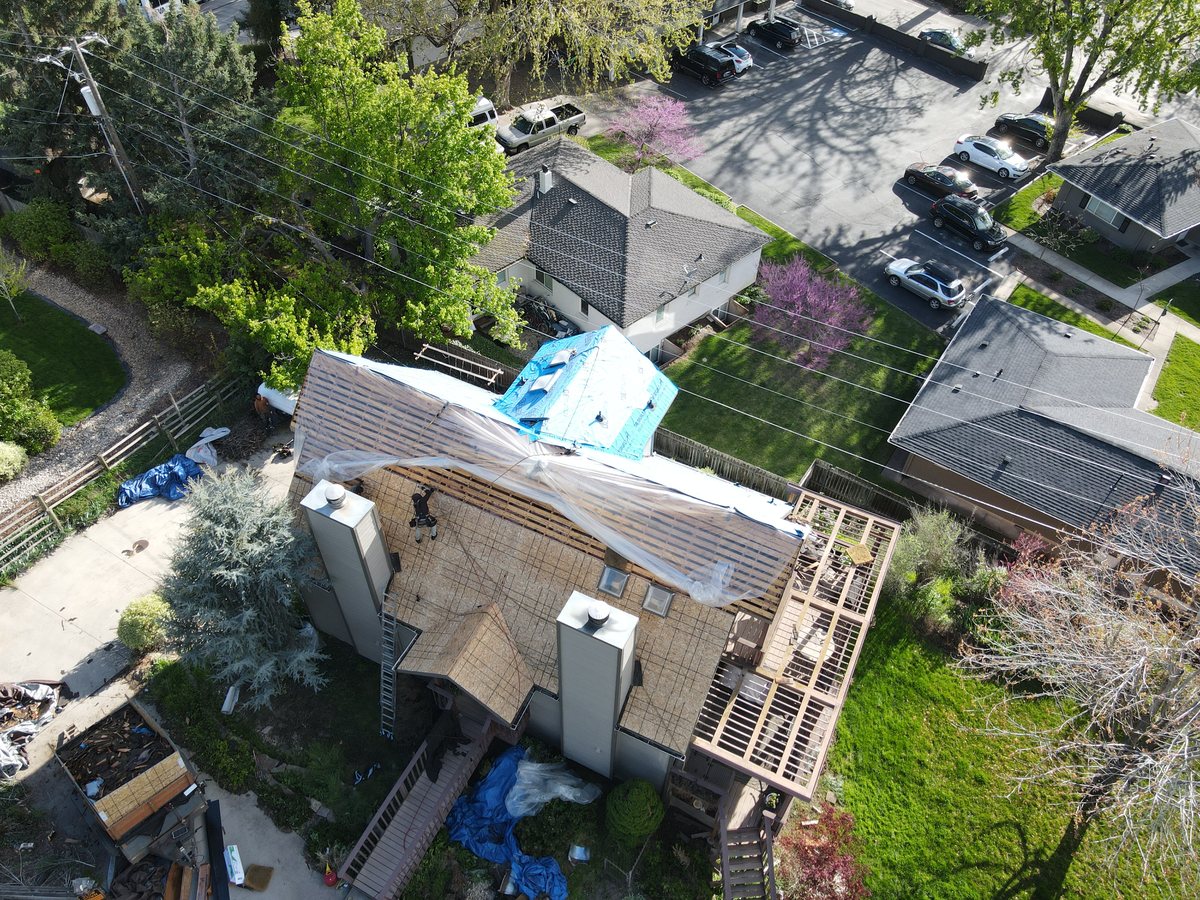
What actually happens during the inspection
Most homeowners have never seen their own roof, so photos of what is actually up there make the conversation a lot easier.
Here is the whole process.
1. We walk the roof
Not the driveway, not a drone pass. Someone physically gets on the roof where it is safe to do so, and inspects the field of the roof, the ridge, hips, valleys, eaves, and every penetration. On roofs too steep or too damaged to walk safely, we say so and use ladders and optics rather than putting someone at risk.
2. We check the details that actually fail
Roofs rarely fail in the middle of a slope. They fail at transitions. Flashing at walls and chimneys, valley construction, pipe boots that have dried and cracked, skylight curbs, drip edge, and the first few courses at the eave where ice damming does its damage. Those are the spots that get the most attention.
3. We look in the attic when we can get to it
The underside of the roof deck tells you things the top surface will not. Staining, daylight through the sheathing, wet or compressed insulation, frost on nail tips in winter, and whether the attic is ventilating the way it should be. Poor attic ventilation is the single most under-diagnosed roofing problem we find in Idaho homes.
4. We photograph everything
Every problem area gets a picture. Wide shot for context, close shot for detail. If there is nothing wrong, you get photos proving that too, which is genuinely useful if you are selling the home or thinking about filing a storm claim later.
5. We sit down and go through it with you
You see the photos. We explain what each one means in plain language, tell you whether it is urgent or something to watch, and give you the realistic options with written pricing. If your roof can be repaired, we say so. Recommending a full replacement on a roof with eight good years left is the fastest way to lose a customer for life, and in a valley this size, word gets around.
What you walk away with
- Photos of every problem area, sent to you
- A written condition summary in plain English
- A clear repair-or-replace recommendation with the reasoning
- Written pricing for each realistic option
- Dated documentation you can use for an insurance claim
- You choose what happens next, on your schedule
When you should get one
- After any significant wind, hail, or heavy snow event
- Before you list a home for sale
- Before you close on a home you are buying
- When you see a stain on a ceiling, however small
- Every few years once the roof passes fifteen
- Any time a door-knocker tells you that you need a new roof
Find out what is actually up there
Free, photo-documented, and yours to keep. Across Eagle, Boise, the Treasure Valley, McCall and Donnelly.
Common questions
It is free, and the report is yours regardless of what you decide.
If you want to take our photos and written assessment to another contractor for a second opinion, do it.
Most residential inspections take 30 to 60 minutes on site, depending on the size and complexity of the roof and whether the attic is accessible. Going through the findings with you takes another 15 to 20 minutes.
Not strictly. It helps, because it lets us check the attic and walk you through the photos in person. If your schedule does not allow it, we inspect, document, and go through everything with you by phone.
No. A large share of the inspections we do end with 'your roof is fine, here is what to watch for.' Some end with a small repair. Some end with a replacement recommendation and photos showing exactly why.
Know exactly where your roof stands, in writing
Tell us the basics and a local Tru Armor roofer calls you back to confirm a time that works.
- Free inspection with photos of what we find
- Written assessment you keep, whether you hire us or not
- Repair-first recommendation when repair is the right call
- A clear report, your options, and time to decide on your schedule
Rather just talk to someone?
Call or text 208-550-9387. If it is an active leak, call - leak calls jump to the front of the line.
Call 208-550-9387