We document the damage. You keep control of your claim.
A roof claim is decided on evidence. Our job is to photograph and document the condition of your roof thoroughly, so you and your carrier are both working from the same record.
How a roof claim actually works
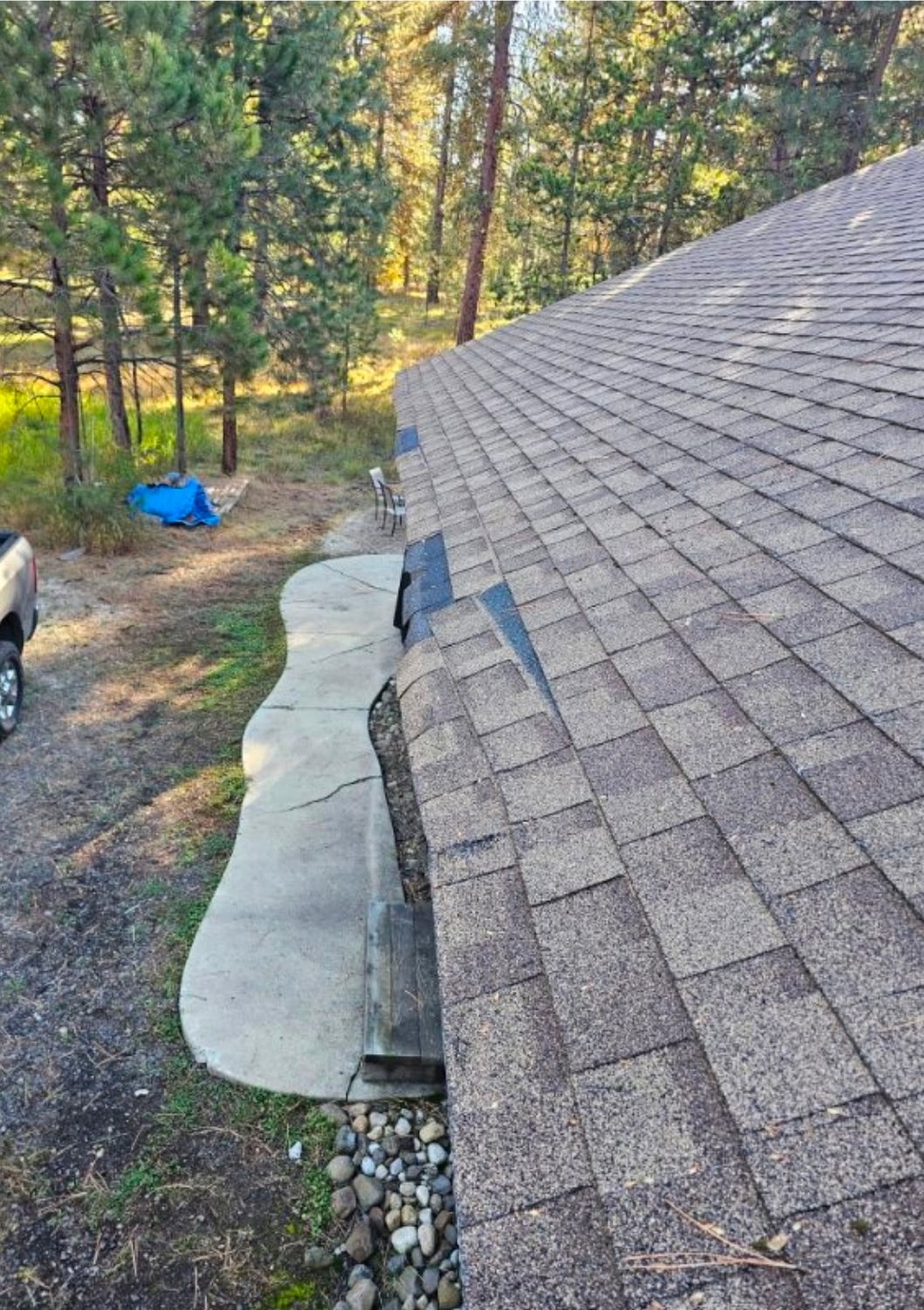
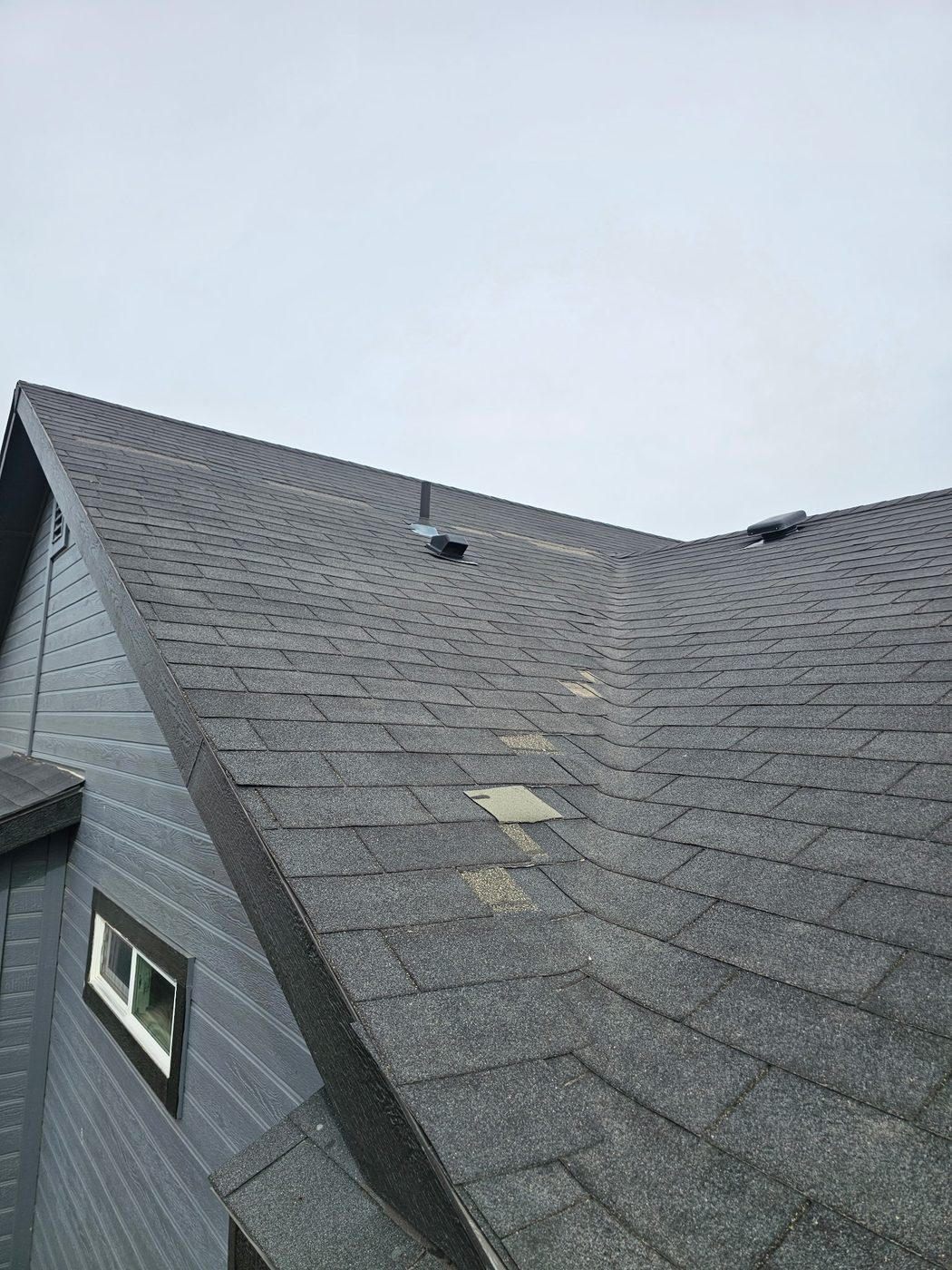
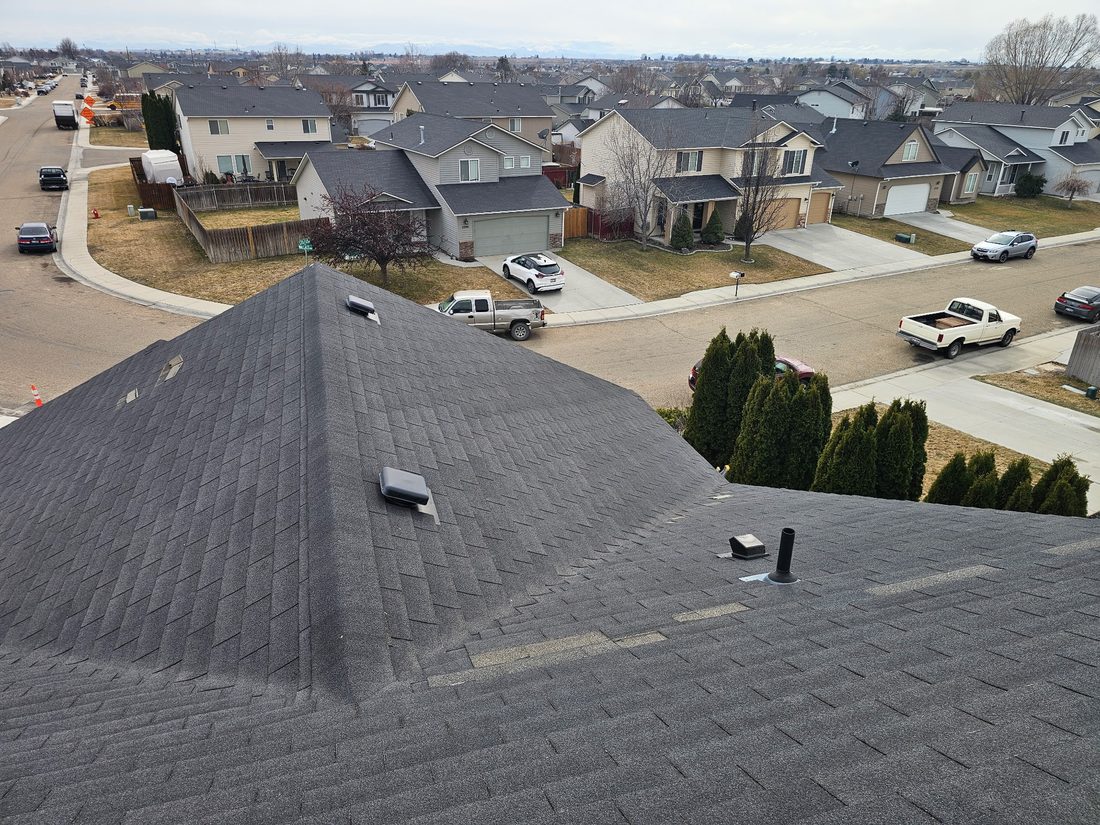
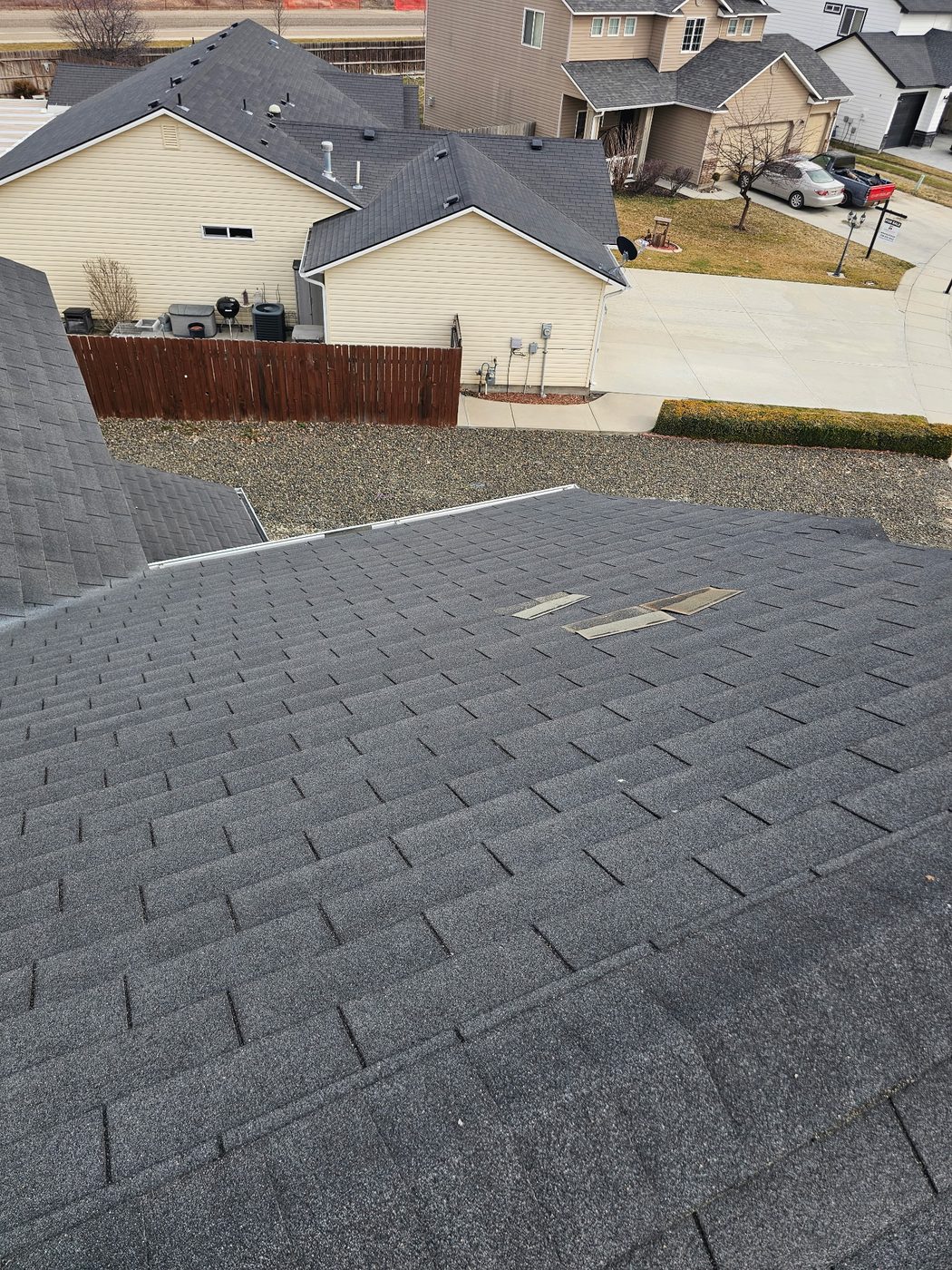
From a recent Treasure Valley wind claim: wind-torn and missing shingles, photographed and documented for the homeowner's claim file.
Step 1, Find out whether you have a claim
Before you call your carrier, it is worth knowing whether there is real damage. Our inspection is free and gives you dated photographs either way. If there is no storm damage, you have not started a claim you did not need, and you have documentation that your roof was sound.
Step 2, You file the claim
You file it, not us. Your policy is a contract between you and your carrier, and in Idaho a roofing contractor cannot file or negotiate a claim on your behalf without a public adjuster license. We handle the roof and the documentation, and you deal with your carrier directly.
Step 3, The adjuster inspects
Your carrier sends an adjuster to assess the damage. We can be there. Having a roofer on the roof alongside the adjuster means damage gets pointed at directly rather than described from the ground, and the conversation happens in the technical language of the trade instead of guesswork.
Step 4, Compare the scope
The adjuster produces a scope and estimate. We produce ours. When they line up, the work proceeds. When they do not, the gap usually comes down to items the adjuster's scope missed, underlayment, flashing, code-required upgrades, ventilation components, or waste factor on a complex roof. We can supply documentation supporting those line items, which you submit.
Step 5, The work gets done
Once the claim is settled and you decide to move forward, we complete the approved work to code with our workmanship warranty on the installation. You pay your deductible. That part is not optional.
What we provide
- Dated photo documentation of all visible damage
- A detailed written scope of required repairs
- Identification of code-required items that apply
- On-site presence during the adjuster inspection
- Plain-English explanation of the roofing side
- Completion of approved work with warranty
Deductible fraud, know this before someone offers
A contractor offering to "eat," "waive," "absorb," or "work around" your deductible is proposing insurance fraud. It is a crime in Idaho, and the homeowner's name is on the claim. Any company willing to defraud your insurer on day one has told you exactly what their word is worth for the next ten years.
We will never make you that offer.
Do not sign an AOB
An Assignment of Benefits hands your claim rights to a contractor. It sounds convenient. What it actually does is remove you from control of your own claim and settlement. You should never need to sign one to get a roof fixed - with Tru Armor, your claim stays yours.
Where we fit in your claim
Tru Armor Roofing is a licensed roofing contractor. Our role in your claim is the roof itself - here is how the responsibilities divide:
- You file the claim - one phone call to your carrier gets it started
- Your carrier decides coverage and settlement, working from the evidence we document
- Your agent is the right person for policy questions, and we can tell you exactly what to ask
- Your deductible stays between you and your carrier
- We handle everything on the roof: inspection, documentation, emergency tarping and the repair itself
If you need someone to advocate on the claim itself, that is a licensed public adjuster or an attorney. We will say so rather than pretend otherwise. What we can do, and do well, is document your roof so thoroughly that the damage speaks for itself.
Start with documentation, not a phone call to your carrier
A free, dated inspection tells you whether you have a claim worth filing before you file anything.
Common questions
A roofer first, in most cases. A free inspection tells you whether you actually have storm damage before you open a claim. If there is nothing there, you have not started a claim you did not need.
Payment arrangements vary and depend on your carrier and your mortgage company, since lenders are often named on claim checks. We will walk through how it works for your specific situation before any work starts.
It is common, and the gap is usually specific missing line items rather than a disagreement about the roof. We can provide documentation supporting those items, which you submit to your carrier. The decision stays with them.
No, and neither can anyone else. Any contractor who guarantees an insurance approval is either lying or does not understand the process. We guarantee thorough documentation. The carrier decides the claim.
It varies widely by carrier and by how busy they are, which after a valley-wide storm event can be considerably. Typical timelines run a few weeks from filing to settlement, and longer if the initial scope needs revisiting.
Know exactly where your roof stands, in writing
Tell us the basics and a local Tru Armor roofer calls you back to confirm a time that works.
- Free inspection with photos of what we find
- Written assessment you keep, whether you hire us or not
- Repair-first recommendation when repair is the right call
- A clear report, your options, and time to decide on your schedule
Rather just talk to someone?
Call or text 208-550-9387. If it is an active leak, call - leak calls jump to the front of the line.
Call 208-550-9387